Language

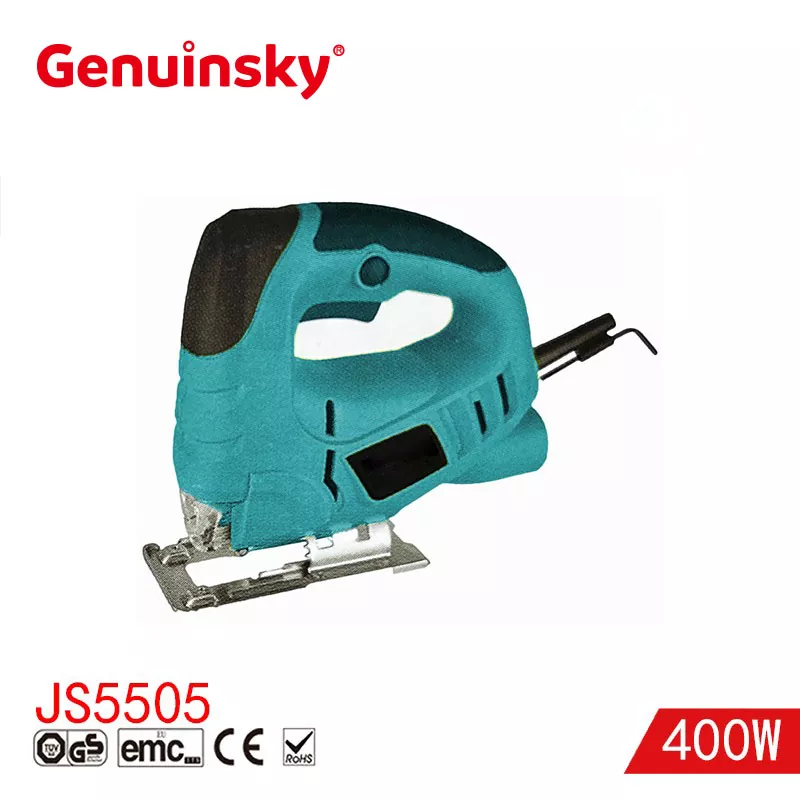
When people think about woodworking tools, they often imagine hammers, drills, or large cutting machines. However, one small but highly versatile tool has quietly changed the way craftsmen create complex shapes and detailed cuts — the Jig Saw.
Today, modern jig saws can cut wood, metal, plastic, and other materials with high flexibility. But the tool we know today has gone through a long evolution, starting from simple hand tools used by craftsmen more than a century ago.
The story of the jig saw is not only about a power tool. It is also a story about how human creativity and technology transformed a basic cutting idea into an essential tool for woodworking and DIY projects.
Before electric tools existed, craftsmen relied mainly on hand-operated saws to create curved and detailed cuts.
One of the early tools was the coping saw, a simple hand saw with a thin blade stretched inside a metal frame.
Unlike traditional saws designed mainly for straight cuts, coping saws allowed workers to:
However, hand cutting required:
For professional craftsmen, there was always a demand for a faster and more efficient cutting solution.
The basic idea behind a jig saw comes from the movement of a thin blade moving rapidly up and down.
Instead of pushing a saw forward manually, engineers developed a mechanism that converted motor rotation into a reciprocating motion.
This created several advantages:
The early versions of electric jig saws appeared in the 20th century and gradually became popular in woodworking workshops.
The first electric models mainly focused on improving cutting efficiency.
Compared with hand saws, they allowed users to complete:
more quickly.
However, early machines were often heavier and had limited adjustment functions.
As electric motor technology improved, jig saws became:
Manufacturers introduced:
These improvements made jig saws suitable for both professionals and DIY users.
One of the biggest changes in jig saw history came with the development of lithium-ion batteries.
Traditional corded jig saws required a constant power source, which limited mobility.
Cordless jig saws changed this by offering:
Today, brushless motor technology has further improved:
With advanced technologies such as CNC machines and automated cutting systems, some people may wonder:
“Why do professionals still use jig saws?”
The answer is flexibility.
A CNC machine can provide extremely precise cutting, but a jig saw offers advantages in many real-world situations.
For small projects or on-site modifications, setting up a CNC machine is unnecessary.
A jig saw can quickly handle:
The thin blade allows users to create:
This makes it valuable for creative woodworking projects.
Compared with many industrial cutting machines, jig saws are:
This is why they remain popular among:
The name “jig saw” comes from the relationship with jig cutting, a method used to create precise patterns and shapes.
A jig is a tool or guide that helps control the position of another tool.
Historically, the concept of using guides for accurate cutting influenced the development of many woodworking techniques.
Although modern jig saws no longer require traditional jigs for most operations, the name remains as a reminder of their original purpose.
Some jig saws include orbital movement, where the blade moves slightly forward during the cutting cycle.
Benefits include:
Different materials require different cutting speeds.
Modern jig saws can adjust speed for:
Advanced designs reduce vibration through:
This improves comfort during longer use.
Although the basic cutting principle has remained similar for decades, jig saw technology continues to improve.
Future developments may focus on:
As DIY projects and customized manufacturing continue to grow, jig saws will remain an important tool for flexible cutting applications.
The history of the jig saw shows how a simple cutting idea evolved into one of the most practical modern power tools.
From early hand saws used by craftsmen to today’s cordless brushless models, jig saw technology has continuously improved while keeping its original purpose — helping people create accurate and flexible cuts.
Whether used for professional woodworking, home renovation, or creative DIY projects, the jig saw remains a valuable example of how traditional craftsmanship and modern engineering can work together.