Abstract
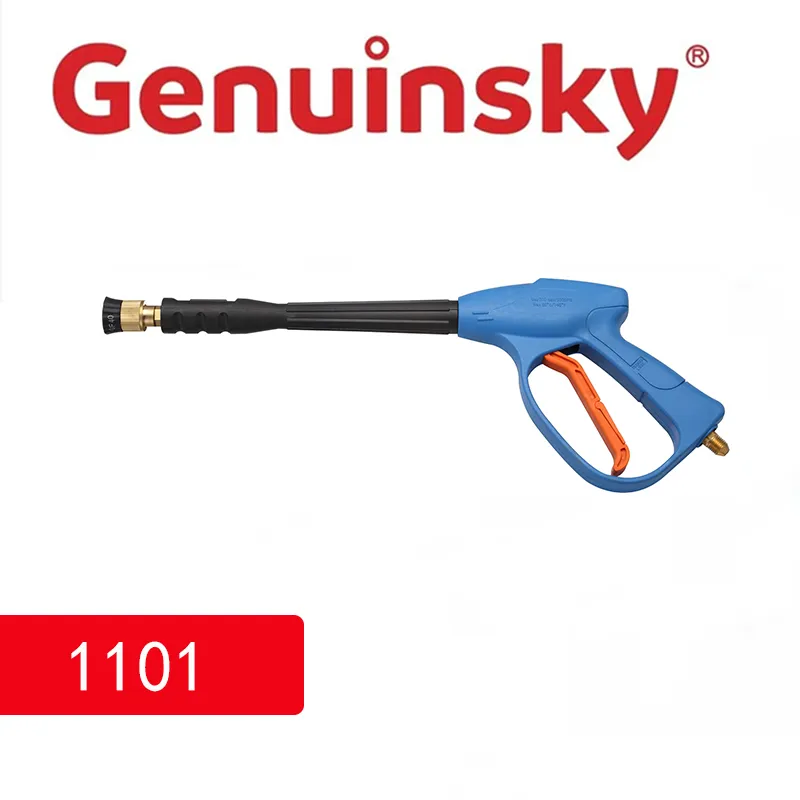
The 150bar 2-in-1 Nozzle High-Pressure Washing Gun sits at a practical intersection of power, control, and daily usability. Its 150 bar operating pressure is strong enough to lift embedded road film without turning every cleaning task into a delicate negotiation with fragile surfaces. The rotating two-in-one nozzle removes the need to carry and swap separate tips, while a body built from engineering plastic and brass addresses the two failure points most often reported in long-term gun use: cracking housings and leaking joints. This article breaks down the design logic behind the tool, explains how each spray mode should be matched to a surface, and offers a maintenance and safety framework that keeps performance consistent across repeated use.
Table of Contents
Understanding the 150 bar pressure envelope
Pressure ratings are frequently treated as a single bragging number, yet what matters in practice is whether the delivered pressure can be controlled at the surface. A 150bar 2-in-1 Nozzle High-Pressure Washing Gun operates in a range that covers the majority of domestic and light commercial cleaning demands without requiring industrial-scale water delivery or specialised handling.
150 bar is sufficient to break the bond between compacted road film and body panels, reducing the need for aggressive mechanical scrubbing.
The pressure sits below the threshold where ordinary paint and trim become unpredictable, provided distance and spray angle are managed correctly.
Stubborn deposits that would otherwise require repeated soaking and brushing can often be displaced in a single controlled pass.
The practical advantage of this pressure level is not simply force. It is the ability to remove material that has bonded to a surface while retaining enough margin to avoid damaging the substrate underneath. Mud, bird residue, winter road salt, and dried insect film respond well to a concentrated jet at 150 bar. The same output, however, demands discipline: a narrow stream held too close to a painted panel concentrates energy across a very small area. The gun's usefulness therefore depends on the operator's willingness to match pressure, distance, and spray shape to the job.
A second consideration is water volume. Pressure alone does not clean; the flow carries displaced material away. A gun rated at this pressure is designed to work with mainstream high-pressure hoses and machines, so the user is not locked into a proprietary pump system. That compatibility matters because it allows the same 150bar 2-in-1 Nozzle High-Pressure Washing Gun to serve as a flexible upgrade rather than a closed platform.
How the 2-in-1 nozzle changes cleaning behaviour
Separate nozzle tips are effective, but they introduce friction: tips are misplaced, threads collect grit, and switching interrupts rhythm. The two-in-one arrangement on this model replaces that workflow with a front-end rotation, and the difference is most obvious when a cleaning task moves between surfaces without warning.
Direct mode: concentrated energy for narrow targets
In direct mode, the water exits as a tight column. The energy is not spread across a wide area, so the impact remains focused on a small footprint. This is the mode for seams, wheel arches, tyre sidewalls, drain channels, and the recessed edges around bumpers where a broad spray would simply bounce away. The stream is also useful for pre-cleaning heavily soiled areas before switching to a gentler pattern for the visible bodywork.
Scatter mode: wider coverage with reduced surface impact
Rotating the front nozzle into scatter mode turns the jet into a fan-shaped curtain. Coverage widens, and the energy per square centimetre falls. This is the appropriate setting for painted panels, glass, plastic trim, and large flat surfaces such as garage floors or exterior walls. The softer footprint reduces the risk of chipping edges or forcing water past seals, while the increased coverage speeds up the rinse phase.
| Spray mode | Best matched tasks | Operating notes |
|---|---|---|
| Direct column | Wheel arches, tyre tread, narrow seams, drain tracks, stubborn patches | Keep moving; avoid holding the stream on one spot for more than a brief pass |
| Fan scatter | Painted body panels, glass, plastic bumpers, walls, floors, large rinse areas | Maintain a wider distance and use overlapping passes for even coverage |
The value of the 150bar 2-in-1 Nozzle High-Pressure Washing Gun becomes clearest during transitions. A user can loosen contamination in a wheel arch with the direct pattern, rotate to scatter for the adjacent fender, and continue along the body without stopping to search for a different tip. That continuity reduces the temptation to use an aggressive setting on a delicate surface simply because changing nozzles feels inconvenient.
Materials, joints, and long-term sealing
A pressure washing gun is a fatigue component. It is dropped, twisted, left in the sun, and repeatedly loaded by pulsating water. The material choices on this model reflect the two regions where fatigue most often becomes visible: the main housing and the front connection point.
Engineering plastic housing
High-strength engineering plastic gives the body a useful balance of impact resistance and corrosion resistance. Unlike metal housings that can dent or develop sharp edges after a fall, a plastic body absorbs shock and returns to shape. It also avoids the rust risk that appears when painted metal chips. The housing is not a cosmetic shell; it contains the trigger mechanism, the valve seat, and the inlet passage, so its rigidity directly affects trigger feel and sealing consistency.
Brass front joint
The front connection, where the nozzle meets the gun body, is the highest-stress sealing point in the assembly. Brass is used here because it maintains dimensional stability under repeated pressure cycling and resists the mineral deposits that can build up around water-exposed threads. A brass joint also provides a more predictable thread engagement than softer materials, which reduces the likelihood of cross-threading during nozzle changes.
- Corrosion resistance: both the plastic body and brass joint tolerate intermittent exposure to water and common cleaning agents without surface breakdown.
- Impact behaviour: the plastic housing flexes instead of denting, preserving the internal alignment of the trigger and valve.
- Sealing stability: brass resists deformation at the nozzle interface, which is where most slow leaks begin.
- Hose compatibility: the rear inlet accepts mainstream high-pressure hoses, so the gun can be used with existing equipment without adapters.
A gun built entirely from metal is not automatically better. Metal transmits impact shock to the internal valve, and a dropped metal gun can develop hairline cracks at threaded sections. A gun built entirely from plastic can deform at the front joint under heat and pressure. The combination used here is a deliberate compromise: plastic where shock absorption matters, brass where dimensional accuracy matters. That is one reason the 150bar 2-in-1 Nozzle High-Pressure Washing Gun can maintain a consistent seal after repeated connect and disconnect cycles.
Ergonomics and trigger control under load
Cleaning with a pressure washer is not a static activity. The user holds a loaded tool at arm's length, changes angles, and maintains grip while water pulses through the system. Hand fatigue is therefore a performance issue, not merely a comfort issue.
Handle shape and grip
The handle on this model follows a palm curve rather than a straight pistol geometry. That shape distributes contact pressure across the hand instead of concentrating it on the web between thumb and index finger. The blue and orange surface treatment is not only visual; the textured zones provide friction without requiring a tight grip. A looser grip reduces forearm strain and makes it easier to keep the nozzle at a consistent distance from the work surface.
Trigger lock and continuous operation
The trigger can be locked in the engaged position during extended cleaning. This matters for large areas such as walls, floors, or a full vehicle rinse. Without a lock, the operator must maintain continuous finger pressure, which leads to tremor and inconsistent nozzle control. With the lock engaged, the hand can relax around the handle while the other hand guides the lance. The result is steadier coverage and less fatigue during long sessions.
The lock also improves safety when the gun is set down briefly. A locked trigger that has been released from the operator's hand should always be treated with the same caution as any pressurised tool, but the ability to interrupt a long spray without fighting the trigger contributes to more deliberate use. For users comparing features, this is a practical detail that separates a tool designed for occasional bursts from one intended for sustained work.
Matching the tool to real cleaning surfaces
A pressure washing gun is only as effective as the surface match. The same 150 bar output can strip mud from a wheel arch and lift paint from an improperly prepared panel, so the application section is less about listing surfaces and more about establishing decision rules.
Automotive bodywork
For painted panels, scatter mode is the default. The fan pattern spreads impact across a wider area and reduces the chance of concentrating energy on a stone chip or panel edge. Distance should be maintained at a level that allows the spray to do the work without the nozzle being close enough to distort the pattern. Pre-rinsing in scatter mode also removes loose grit before a closer pass, which reduces the risk of dragging abrasive particles across the clear coat.
Wheels, arches, and lower body
These areas tolerate more concentrated energy. Direct mode is appropriate for tyre sidewalls, wheel wells, and the lower sill area where road film accumulates. Even here, continuous motion matters: a stationary direct jet can heat the surface and force water into bearing seals or brake components. Short, overlapping passes are more effective than prolonged blasting at a single point.
Exterior walls, floors, and garden furniture
Hard, uncoated masonry and concrete can accept a more aggressive approach. Scatter mode at a moderate distance removes algae, dirt splashes, and general weathering without gouging mortar joints. Direct mode is useful for stubborn patches on concrete, but the nozzle should be kept moving to avoid visible striping. For painted or varnished garden furniture, scatter mode at a greater distance is the safer starting point.
- Start wide, then narrow: begin with scatter mode and increase concentration only if contamination remains after a controlled pass.
- Distance before pressure: moving the nozzle farther from the surface is often more effective than increasing the aggression of the spray pattern.
- Test an inconspicuous area: on unknown coatings, verify the response on a hidden section before committing to a full panel.
The 150bar 2-in-1 Nozzle High-Pressure Washing Gun is not limited to vehicle cleaning, but its design rewards users who think in terms of surface sensitivity. A cleaning session that begins with the scatter pattern and reserves direct mode for specific problem areas will generally produce a better result than one that starts with maximum concentration and works backward.
Maintenance and safe operating habits
Consistent performance from a pressure washing gun depends less on complex servicing than on a few repeatable habits. Most long-term issues originate at connection points, seals, and the nozzle interface, and those are exactly the areas that routine checks can protect.
Post-use routine
- Flush the gun: run clean water through the system briefly after using detergent or cleaning agents to prevent residue from drying inside the valve and nozzle passages.
- Wipe the front joint: remove grit and water spots from the brass connection before storing the gun; abrasive particles at this interface accelerate seal wear.
- Release residual pressure: trigger the gun briefly after shutting off the water supply to depressurise the hose and gun body.
- Store dry and protected: avoid leaving the gun in direct sunlight for extended periods, and keep the nozzle away from dusty floor surfaces.
Operating precautions
The most common cause of surface damage is not excessive pressure but excessive dwell time. A direct jet held against a painted edge or a plastic trim clip can generate enough local heat and force to deform the material even at a moderate pressure rating. Keep the nozzle moving, maintain a sensible distance, and never use the direct pattern on a surface that has not been evaluated for tolerance. The two-in-one nozzle makes it easy to switch to a safer pattern, and that convenience should be used deliberately.
Inspect the brass front joint periodically for mineral buildup or thread wear. A joint that feels loose or requires extra force to seat the nozzle is signalling that the sealing surfaces need attention. Because the rear inlet is designed to fit mainstream hoses, users should also verify that the hose connector is clean before attaching it; grit introduced at the inlet can travel into the valve and cause intermittent trigger response.
Frequently asked questions
-
Can the 2-in-1 nozzle be used on painted car panels?
Yes, in scatter mode and at an appropriate distance. The fan pattern reduces the energy concentration that can damage paint. Direct mode should be reserved for wheels, arches, and unpainted lower areas. Always test an inconspicuous section first if the paint condition is unknown. -
What is the advantage of a brass front joint over a plastic joint?
Brass maintains its dimensions better under repeated pressure cycling and resists thread wear. That translates into a more stable seal at the nozzle interface, which is the point where slow leaks most often develop. Plastic joints can be lighter, but brass is preferred where sealing consistency matters most. -
How should the trigger lock be used safely?
Engage the lock only when continuous spraying is needed, such as during a large rinse. Keep the nozzle directed at the work surface, never at people or animals. When pausing, disengage the lock and release residual pressure. The lock is a fatigue-reduction feature, not a substitute for active control. -
Does the gun fit standard high-pressure hoses?
The rear inlet is designed to accept mainstream high-pressure hose connectors. This allows the gun to be used with common machines without a proprietary adapter. Check that the hose connector is clean before attaching it to avoid introducing grit into the valve. -
What maintenance does the nozzle rotation mechanism need?
Keep the front joint clean and free of dried detergent or mineral deposits. After use, rotate the nozzle through both positions briefly to prevent stiffness. If rotation becomes difficult, flush the front assembly with clean water rather than forcing the mechanism.
For buyers evaluating equipment for repeated use, the Genuinsky range includes models built around these practical maintenance and material principles. A tool that is easy to keep clean, simple to switch between patterns, and comfortable to hold for extended periods will see more consistent use than one that demands constant adjustment.
Contact us to discuss how the 150bar 2-in-1 nozzle configuration fits your cleaning equipment requirements.
Contact Us